
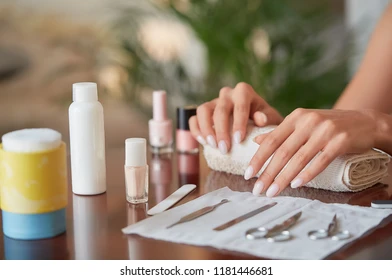
Let’s face the cold, hard truth: your hands are basically the ambassadors of your body. They’re out there shaking hands, waving at neighbors you’re trying to avoid, and frantically gesturing during Zoom calls to prove you’re still awake. Yet, most of the time, we treat them like the “unpaid interns” of our anatomy. We shove them into garden gloves, submerge them in dishwater, and then wonder why our cuticles look like they’ve been through a localized cactus storm. It is time to stop the neglect and embrace The Art of Perfect Nails. Because, honestly, if your nails don’t look like they belong in a museum, are you even living?
Most people think filing your nails is like sanding down a piece of plywood from Home Depot. It’s not. In the world of The Art of Perfect Nails, filing is a spiritual negotiation between you and your keratin. You can’t just go back and forth like you’re trying to start a fire; that’s how you get splits, snags, and a visual aesthetic we like to call “The Jagged Cliffside.”
No, you must file in one direction, with the grace of a professional cellist. Whether you’re going for the “Stiletto” (for when you want to look dangerous), the “Coffin” (for when your old look is dead and buried), or the “Squoval” (the beige minivan of nail shapes—reliable and sensible), the shape defines your personality for the next two weeks. Choose wisely. Your nails are the only ten things you can truly control in this chaotic universe.
Next, we must address the cuticle. These tiny flaps of skin have one job: to protect your nail bed. But let’s be real, they often overstep their boundaries and start colonizing your entire finger. Mastering The Art of Perfect Nails requires a delicate touch here. You don’t want to go in like a lumberjack with a chainsaw.
The secret is hydration. If you aren’t using cuticle oil, what are you even doing? Your cuticles should be as soft as a whisper, not as crunchy as a crouton. A gentle push-back is all they need—a polite reminder that while we appreciate their service, they need to stay in their lane so the polish can shine. Treat them with respect, and they won’t turn into those painful hangnails that feel like a tiny demon is biting your finger every time you reach into your pocket.
Now we reach the masterpiece phase. Applying polish is where the “Art” in The Art of Perfect Nails really nailtherapyoc happens. We’ve all been there: you try to do a quick DIY job before a date, and five minutes later, you have more polish on your knuckles than on your nails. It looks less like a manicure and more like you fought a bottle of cranberry juice and lost.
The secret to perfection is the “Three-Stroke Method.” One down the middle, one on each side. If you try to do fifteen strokes, you’re just making a lumpy mountain of regret. And for the love of all that is holy, use a base coat! Unless you want your natural nails to be permanently stained a sickly shade of “Rotten Pumpkin” after you take off that orange polish, the base coat is your best friend. Follow it up with a top coat so shiny you can see your reflection—and your renewed sense of self-worth—staring back at you.
You might ask, “Is all this effort really worth it?” Yes. Absolutely. Because when you have mastered The Art of Perfect Nails, you feel invincible. There is a specific kind of power that comes from tapping your perfectly manicured nails against a table while waiting for someone to finish a boring story. It’s the ultimate “I have my life together” camouflage. Even if your car is making a weird clicking noise and you’re pretty sure you left the oven on, as long as your nails are perfect, the world will assume you are a high-functioning goddess of productivity.
So, put down the nail-biting habit and pick up the buffer. Your hands have done enough heavy lifting; it’s time they got a promotion to “Masterpiece” status.
Would you like me to create a step-by-step “Emergency Repair Guide” for when you inevitably chip a nail five minutes after leaving the salon?