
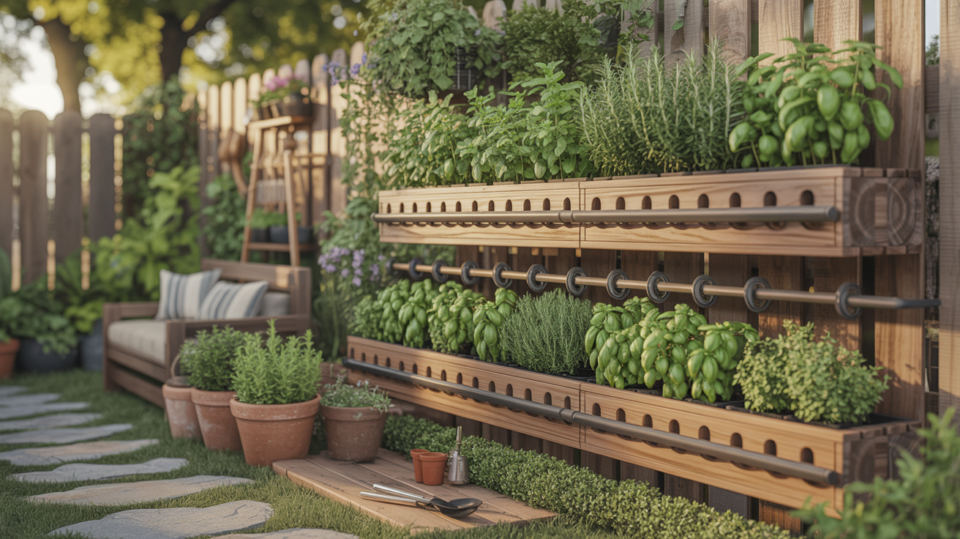
A vertical herb garden saves space and looks impressive, but it creates a challenge that ground-level gardens avoid. Plants at the top receive full sun while those at the bottom sit in shade cast by their neighbors above. Without rotation, herbs in lower positions grow leggy, pale, and weak while top-tier plants flourish.
Herbs are sun-hungry plants. Basil, rosemary, thyme, oregano, and most culinary favorites need at least six hours of direct sunlight daily to produce the aromatic oils that give them flavor. Less light means weaker flavor, stretched stems, and sparse leaf production.
In a vertical setup, the top row gets unobstructed sun. Each row below receives progressively less light as the plants above block incoming light. By the bottom tier, your herbs may get only a fraction of what they need. Rotation evens out this exposure over time, so every plant gets adequate light across the growing season.
Weekly rotation works well for most vertical herb garden setups. Moving containers once a week gives each plant time in the prime top position while preventing any single plant from languishing too long in the shade.
More frequent rotation, such as every three or four days, benefits fast-growing herbs like basil that respond quickly to light changes. Slower growers like rosemary tolerate longer intervals without noticeable stress.
Establish a consistent rotation day so the task becomes routine rather than something you forget until plants start struggling. Sunday mornings or another predictable time slot help build the habit.
For a vertical garden with three tiers, simple top-to-bottom rotation keeps things balanced. Move the top container to the bottom, shift the middle container to the top, and place the former bottom container in the middle. Repeat weekly.
For four or more tiers, rotate in one direction consistently. Each week, the top moves to the bottom, and everything else shifts up one position. This cycle ensures every container spends equal time at each level over the course of a month.
If your vertical garden has staggered positioning with some spots receiving more side light than others, factor horizontal position into your rotation as well. Track which positions get the best exposure and make sure every herb visits those spots regularly.
Some herbs tolerate lower light better than others. Use this knowledge to assign positions strategically between rotations.
Mint, parsley, chives, and cilantro handle partial shade reasonably well. These can spend extra time in lower positions without significant quality loss.
Basil, rosemary, thyme, oregano, and sage require full sun. Prioritize rotating these through the top positions frequently and avoid leaving them at the bottom for extended periods.
An herb growing container with mint can anchor the bottom tier semi-permanently if you rotate sun-lovers through the upper positions on a tighter schedule. This approach simplifies logistics while still addressing each plant’s needs.
Heavy containers make rotation tedious. Choose lightweight pots and soil mixes to make weekly movement practical. If lifting becomes a barrier, you will skip rotations and defeat the purpose.
Modular vertical systems with removable containers rotate more easily than fixed structures. Consider this when selecting or building your garden. Systems designed for easy access encourage consistent maintenance.
Water containers before rotating if dry soil makes them lighter, but risks root damage from shifting. Water after rotating if you prefer heavier, more stable containers during the move. Find the sequence that works for your setup.
Watch your herbs for signals that light distribution remains uneven despite rotation.
Leggy stems with long gaps between leaves indicate insufficient light. If certain plants consistently show this growth pattern, they need more time in the top positions.
Pale or yellowing leaves on otherwise healthy plants suggest light stress. Move affected plants up the rotation priority list.
Lush, compact growth with deep green color confirms adequate exposure. Plants showing these traits are getting what they need from your current schedule.
A simple log prevents confusion as weeks pass. Note which container sits in which position each week. Review monthly to confirm every plant has cycled through all tiers equally.
A small label or colored tag on each herb growing container makes identification easier when plants have grown and changed shape since you started.