
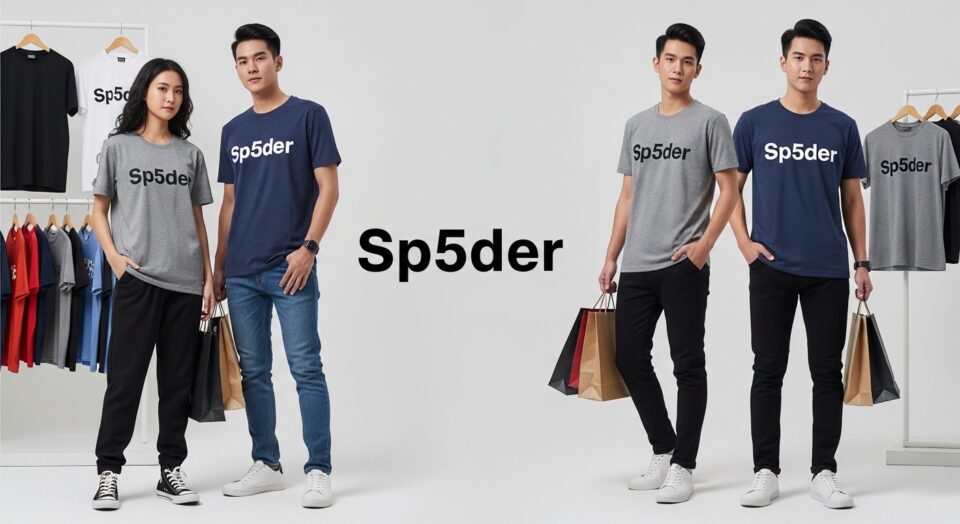
The interplay between maximalist graphics and restrained simplicity defines contemporary streetwear evolution. Bold Sp5der prints embody visual audacity, often saturated with intricate motifs and kinetic energy, while minimalism thrives on composure, silence, and architectural clarity. When these two aesthetics collide, the result can either be visually dissonant or profoundly harmonious. The key lies in intentional contrast rather than chaotic accumulation. Understanding this duality allows the wearer to orchestrate outfits that feel curated instead of cluttered. In essence, fashion becomes a dialectic between expression and restraint, where each element amplifies the other through opposition rather than competition.
Statement pieces act as gravitational centers in an outfit. Within the realm of Sp5der, graphic-heavy garments naturally assume this role, commanding attention through bold iconography and unconventional design language. The challenge is not in showcasing them, but in regulating their dominance. A statement piece should articulate identity without overwhelming the visual narrative. When treated as the nucleus of the outfit, everything else becomes orbiting support, reinforcing rather than rivaling its presence. This approach transforms streetwear into a controlled visual hierarchy rather than a fragmented assortment of garments.
Every compelling outfit requires a singular visual protagonist. When working with Sp5der prints, the garment itself should dictate the outfit’s tone, rhythm, and energy. Whether it is a hoodie or graphic top, allowing it to lead ensures coherence. The surrounding pieces should function as quiet accompaniments, deliberately subdued in design and texture. This intentional subordination prevents visual fragmentation. A well-defined focal point also simplifies decision-making, reducing stylistic noise and ensuring that the outfit communicates a clear, assertive message rather than multiple competing narratives.
Minimalist foundations are the architectural skeleton of balanced styling. Clean silhouettes, unembellished fabrics, and streamlined tailoring provide the necessary counterweight to graphic intensity. Think of monochrome trousers, plain tees, or structured outerwear devoid of ornamental excess. These elements do not compete; they stabilize. When paired with bold prints, they act as visual “negative space,” allowing the eye to rest between moments of intensity. This equilibrium is essential for preventing sensory overload and ensuring that bold pieces retain their impact rather than becoming visually diluted.
Color orchestration is central to achieving cohesion. Bold Sp5der prints often feature saturated hues that demand grounding elements. Neutral palettes—such as black, white, beige, and muted greys—function as chromatic stabilizers. They absorb excess visual energy and reframe it within a controlled spectrum. Strategic repetition of neutral tones across different garments creates continuity, while selective echoing of accent colors within prints can subtly reinforce unity. The objective is not to neutralize creativity, but to channel it through a disciplined chromatic framework that enhances readability and elegance.
Texture introduces depth beyond color and form. Pairing visually loud prints with understated fabrics such as cotton twill, brushed fleece, or smooth jersey creates tactile balance. The contrast between complexity and simplicity becomes sensory rather than purely visual. Overly glossy or heavily patterned fabrics alongside Sp5der graphics can amplify chaos, whereas matte finishes and soft weaves temper it. This nuanced interplay of materials elevates the outfit from basic styling to curated composition, where tactile restraint enhances visual boldness.
Accessories function as punctuation marks in fashion syntax. When dealing with already expressive pieces, restraint becomes essential. Minimalist watches, subtle chains, or understated caps are sufficient to complete the narrative without introducing interference. Over-accessorization risks diluting the impact of Sp5der prints, transforming intentional styling into visual congestion. Each accessory should serve a deliberate function—either reinforcing the color story or subtly echoing the outfit’s structural themes. In this context, less becomes an instrument of precision rather than absence.
Layering offers dimension but requires disciplined execution. When incorporating bold prints, outer layers should be strategically subdued to prevent visual escalation. Open jackets, neutral overshirts, or elongated coats can frame Sp5der pieces without overpowering them. Layering should resemble architectural framing rather than decorative piling. Each layer must reveal or conceal with intention, guiding the viewer’s gaze through structured visual progression. This method introduces complexity while preserving clarity, ensuring the outfit remains intellectually coherent rather than visually erratic.
Footwear serves as the grounding force of any ensemble. In outfits dominated by graphic intensity, shoes should either reinforce neutrality or provide controlled contrast. Clean sneakers, monochrome silhouettes, or understated boots work effectively to stabilize the overall aesthetic. Excessively ornate footwear risks competing with upper garments, disrupting hierarchy. Instead, footwear should act as an anchor—visually steady, conceptually consistent, and deliberately unembellished unless strategically chosen to echo a subtle tone within the print.
One of the most frequent errors in styling bold streetwear is overcomplication. Layering multiple loud pieces, mixing discordant patterns, or over-accessorizing leads to visual entropy. Another misstep is ignoring proportional balance, where oversized graphics dominate without counterweight. Avoiding these pitfalls requires disciplined editing—removing rather than adding, refining rather than accumulating. Successful styling emerges not from excess but from curated restraint, where every element earns its place within the ensemble. The true mastery lies in knowing when to stop.