
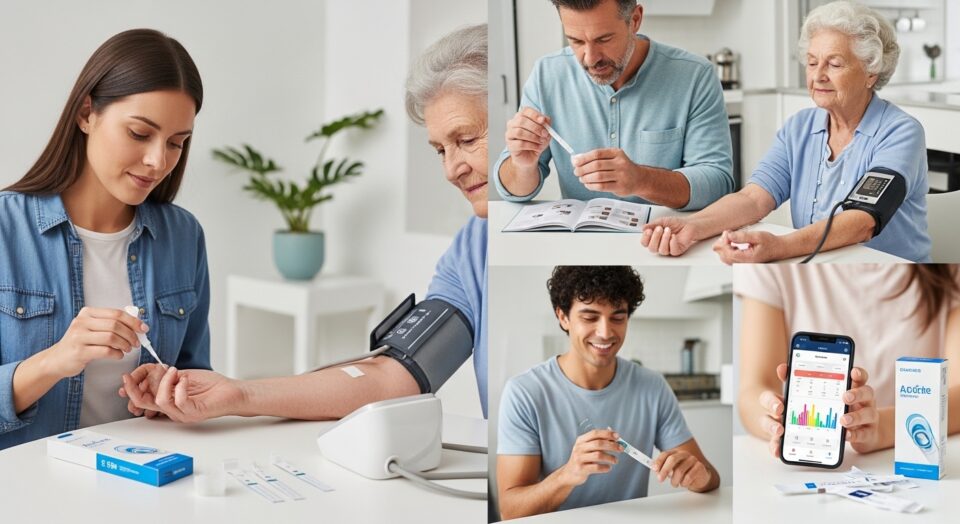
The at-home medical testing market has undergone a transformation in the past decade that has fundamentally changed the relationship between consumers and diagnostic information. Tests that once required a physician’s order, a laboratory visit, and a wait of days for results can now be performed with a finger prick, a saliva sample, or a swab collected at home, with results available online within 24–72 hours. This democratisation of diagnostic access represents a genuine advance in health equity — but it requires accompanying health literacy to be genuinely beneficial rather than misleadingly reassuring or unnecessarily alarming.
The scope of conditions addressable through at-home testing now spans an impressive clinical range. DNA test kits for ancestry and health risk analysis examine hundreds of thousands of genetic variants from a saliva sample. HSV test kits and comprehensive STD tests screen for sexual health conditions through blood spot or swab collection. At-home ANA testing for autoimmune screening, thyroid function panels, cholesterol and lipid profiles, HbA1c for diabetes monitoring, fertility hormone panels, and vitamin and mineral status tests are all available through certified laboratory processing of home-collected samples.
The common thread across quality at-home testing services is that the sample collection is performed by the consumer but the actual laboratory analysis is performed by CLIA-certified laboratories using the same methodologies as clinical laboratory testing. The distinction between laboratory-processed at-home tests and purely point-of-care rapid tests matters significantly for result accuracy.
Several factors have converged to accelerate consumer adoption of at-home testing. Cost transparency — knowing the exact price before ordering, without insurance negotiation complexity — appeals to the large proportion of the population with high-deductible health plans for whom routine laboratory testing represents significant out-of-pocket expense. Convenience removes the scheduling, travel, and wait times associated with traditional laboratory visits. Privacy reduces the barrier to testing for stigmatised conditions — sexual health testing, genetic testing, and mental health biomarker testing all benefit from the greater privacy of home collection.
The COVID-19 pandemic accelerated familiarity and comfort with self-collection testing at a population level, normalising the concept of collecting diagnostic samples at home in a way that will have lasting effects on consumer health testing behaviour.
The primary risk of expanded at-home testing access is the interpretation of results without adequate clinical context. A positive ANA screening test — whether obtained at home or in a clinical laboratory — requires specialist interpretation that accounts for titre, pattern, clinical presentation, and medication history. An HSV serology result requires understanding of window periods, the distinction between IgG and IgM methodologies, and the difference between HSV-1 and HSV-2 clinical implications. A genetic risk variant identified through a DNA test kit requires understanding of penetrance, expressivity, and the difference between genetic risk and clinical destiny.
Platforms that provide not just testing access but clear, accurate educational context — explaining what tests measure, what results mean, and when clinical follow-up is warranted — serve a genuinely important role in making expanded testing access beneficial rather than harmful. Resources like mymedicallab.net bridge this gap, providing the health literacy context that transforms raw test results into genuinely actionable health information.